

Evaluation of the acceptance of continuing education studies with a focus on the AIM Austrian Institute of Management
Economy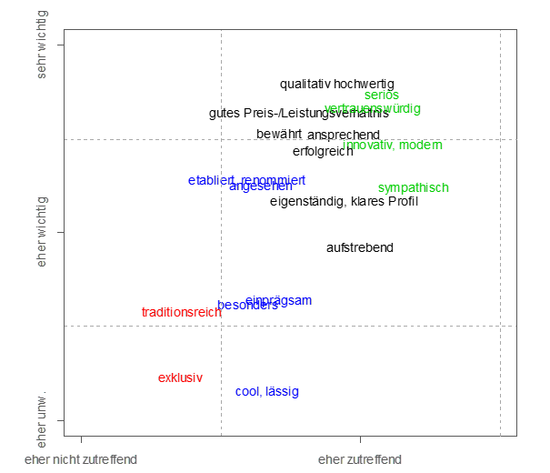

Acronym
AIM acceptance
Project running time
01/06/2016 - 31/08/2016
client/sponsor
aim - austrian institut of management
Key findings
The results show that people who have completed higher levels of education and are at a higher management level tend to deal with the topic of continuing education more frequently. In addition, there is a higher income among those who have already dealt with continuing education than among those who have not.
Almost one in three people named project management, process management and organisation as interesting subject groups for further training, followed by information technology. In addition, more than a quarter of those surveyed considered corporate governance and management as well as energy, environment and sustainability to be interesting topics for further training.
A continuing education programme with an average of 81 ECTS is generally considered appropriate. At around 72 ECTS, respondents' own willingness to make the total effort required for a continuing education programme is naturally less pronounced. A distance learning proportion of 70 % is optimal for the respondents, whereby the necessary attendance dates should take place either in the evening between Monday and Friday, or Friday evening and at the weekend.
Further training costs of around € 11,000 on average were cited as appropriate in terms of price, with the respondents' own willingness to pay a mere € 7,750 on average. Despite all professional ambitions, interest in the core topic covered in the continuing education programme is by far the most important decision criterion for those interested.
AIM tends to be rated as likeable, innovative, modern, serious, trustworthy and aspirational. Of these, the categories serious and trustworthy are cited as the most important. Overall, the criterion "high quality", which is more likely to apply to AIM, is considered to be the most important. AIM can therefore best be described as authentic and progressive.
Conclusion
Obviously, people who have already achieved a certain level of professional prestige and are striving for "higher things" are more likely to be addressed by continuing education programmes. Further training is an interesting topic for 95% of respondents - the remainder may be content with what they have achieved (those with a tertiary qualification) or may not even be aware of the opportunities offered by further training (those with a compulsory school or apprenticeship qualification).
AIM's offer of 90 ECTS continuing education programmes is considered appropriate. One or two periods of attendance are also desirable. In addition, AIM's course fees are within the range of perceived appropriateness and the individual's willingness to pay.
Even without the experience of personal contact, AIM leaves an authentic and progressive impression. In the future, it will continue to be important to convey a high level of quality in addition to seriousness and trustworthiness, as these criteria are by far the most important for the target group.
Links & Documents
Evaluierung der Akzeptanz von Weiterbildungs-Studien mit Fokus auf das AIM
Download
Projectleader
Mag. Christian Pfeiffer
Tel: +43 5 7705-5433
christian.pfeiffer(at)hochschule-burgenland.at
client/sponsor